
Why Hydroponic Lemongrass Deserves More Attention
Lemongrass is one of the most useful tropical herbs in Vietnamese agriculture. It is used in home cooking, restaurants, herbal teas, natural fragrance, spa products, essential oils and value-added farm products. In Vietnam, lemongrass also fits naturally into small farms, home gardens, herb nurseries and circular farming systems.
Traditionally, lemongrass is grown in soil. That works well because the plant is hardy, tolerant of heat and easy to propagate from clumps. But as farmers and small agribusinesses look for cleaner, more controlled and more space-efficient production methods, a new question becomes interesting:
Can lemongrass be grown hydroponically?
The answer is yes. Hydroponic lemongrass is possible, practical and promising — especially for fresh herb production, nursery propagation, urban farming, controlled demonstration farms and high-quality raw material trials.
It is not the perfect crop for every hydroponic system. Lemongrass is a large clumping grass with strong roots and long leaves, so it needs more space than lettuce, basil or mint. But when designed correctly, hydroponic lemongrass can become a smart farming model for Vietnam: clean, water-efficient, fast-growing and easy to connect with restaurants, home gardeners and value-added herbal products.
What Is Hydroponic Lemongrass?
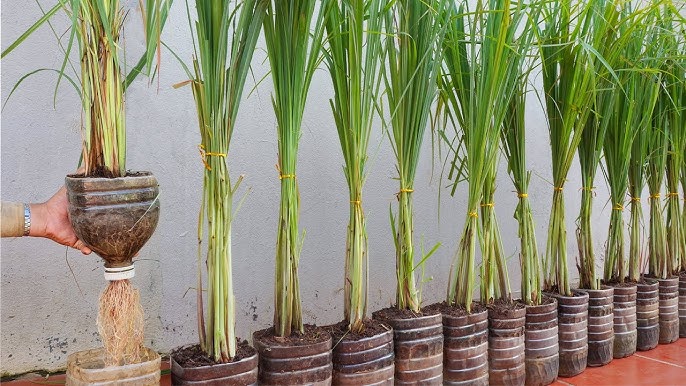
Hydroponic lemongrass means growing lemongrass without soil. Instead of taking nutrients from the ground, the plant receives water, oxygen and dissolved minerals through a nutrient solution.
In simple terms, hydroponics replaces soil with three things:
- A support system for the roots and stems
- A nutrient solution containing essential plant minerals
- Water and oxygen management to keep roots healthy
FAO describes hydroponics as a climate-smart method that can use up to 90% less water than conventional cultivation, while reducing exposure to soil-borne pests and improving use of space, inputs and labor. FAO also notes that herbs are among the crop groups well suited to hydroponic systems.
For lemongrass, the goal is not to copy lettuce hydroponics. The goal is to design a system that respects lemongrass biology: it grows tall, forms clumps, produces many shoots, and needs strong light, airflow and root space.
Why Grow Lemongrass Hydroponically?
Hydroponic lemongrass has five main advantages.
First, it can produce a cleaner product. Because the plant is grown without soil, fresh stalks and leaves are easier to wash, process and package. This matters for restaurants, fresh herb retailers, urban consumers and premium herb brands.
Second, hydroponics can improve water efficiency. A 2024 review of hydroponic and aeroponic systems reported that hydroponic production can reduce water use by more than 90% and fertilizer use by up to 60%, depending on crop, system and management.
Third, hydroponics gives farmers more control. Nutrients, water, pH, root-zone moisture and growing conditions can be monitored more precisely than in soil. This does not guarantee success, but it gives growers a better operating dashboard.
Fourth, hydroponic lemongrass is useful for nurseries. Lemongrass is often propagated by division. A clean hydroponic or semi-hydroponic nursery can produce uniform rooted plants for pots, balcony gardens, restaurants, landscaping and small farms.
Fifth, it fits Vietnam’s future direction: smart farming, clean herbs, urban agriculture, green farming and value-added herbal products.
What the Research Says
Direct research on hydroponic lemongrass is still limited, but the available evidence is encouraging.
A study comparing lemongrass grown in hydroponic, aquaponic and soil systems found that hydroponic lemongrass yield increased by 92.3% compared with soil, while aquaponic lemongrass yield increased by 40%. The same study reported that daily water use was about two times lower in hydroponics than in soil, and water-use efficiency was about three times higher in hydroponics.
The study also found that cultivation system affected biochemical composition. In hydroponics and aquaponics, some aroma-related compounds such as β-myrcene, geranial, geraniol and geranyl acetate increased compared with the soil system.
This does not mean every farmer will automatically get 92% higher yield. Results depend on climate, variety, nutrient recipe, light, spacing, water oxygenation, disease control and harvest management. But the study supports an important idea: lemongrass is not only soil-tolerant; it can respond strongly to well-managed soilless systems.
Why Vietnam Should Pay Attention?
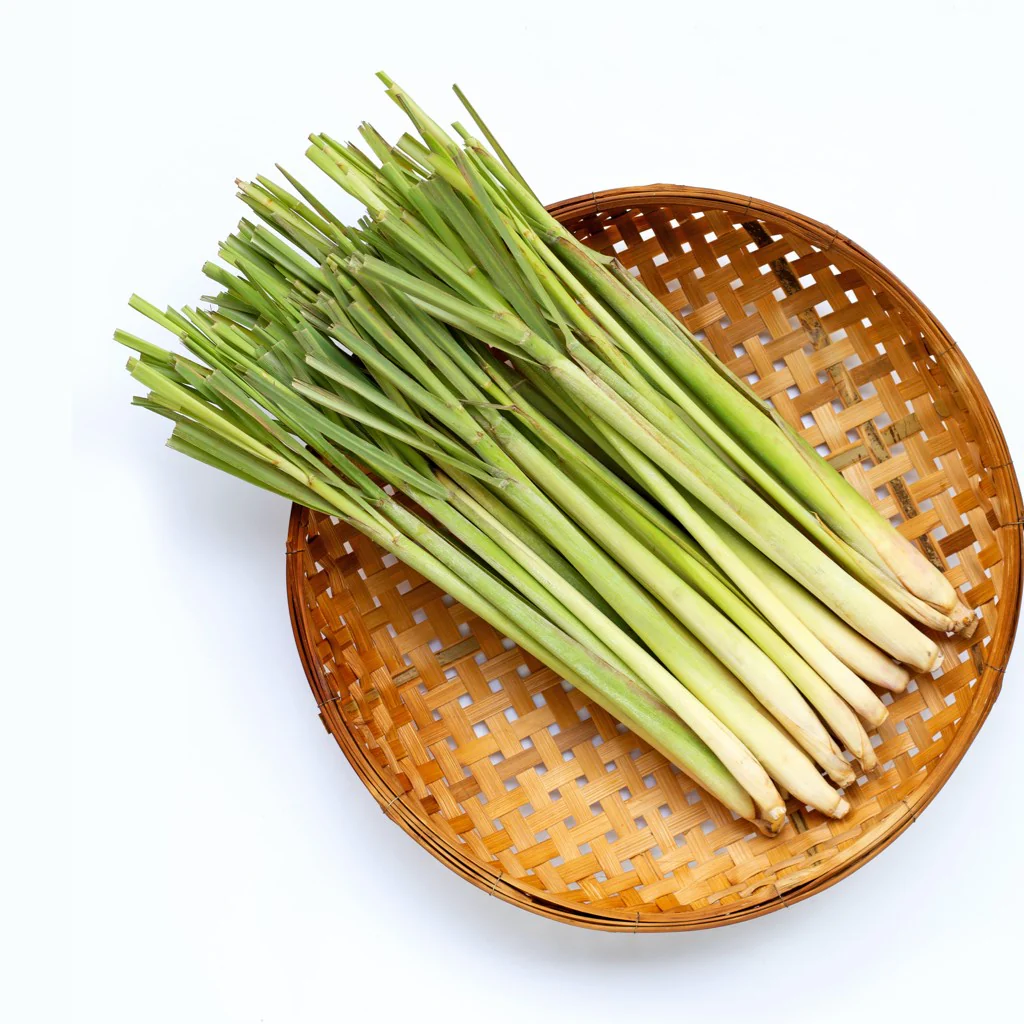
Vietnam already has a strong cultural and agricultural connection with lemongrass. It is used in Vietnamese cooking, fresh markets, herbal drinks, livestock odor control, insect-repellent products, hydrosol, essential oil and farm-based value-added products.
Vietnamese research on essential oil production from Cymbopogon citratus found that lemongrass samples from Bac Giang and Phu Yen produced essential oil yields of 2.55 mL/kg and 3.96 mL/kg, respectively, with corresponding citral contents of 45.5% and 68.1%. The study also found that cultivation origin and management affected oil yield and quality.
That last point matters. If cultivation affects oil yield and citral quality, then controlled systems such as hydroponics may become useful for high-quality planting material, research trials, premium fresh herbs and selected essential-oil raw material.
Vietnamese research has also shown that vacuum fractional distillation can upgrade lemongrass essential oil into fractions with very high citral content. One study reported optimal fractional distillation conditions that produced total citral content of about 95%, with about 80% recovery in the main citral fractions.
This creates a larger opportunity: Vietnam should not only grow lemongrass as a low-value raw herb. It can build a value chain around clean cultivation, nursery material, fresh herbs, hydrosol, essential oil, citral-rich fractions and branded natural products.
The Best Hydroponic Systems for Lemongrass
Not all hydroponic systems are equally suitable for lemongrass.
Lettuce and leafy greens can grow well in small NFT channels. Lemongrass is different. It becomes tall, heavy and root-dense. If the system is too small, roots clog channels, plants fall over, airflow becomes poor and harvest becomes difficult.
The best systems for lemongrass are usually those that give the plant enough root space.
1. Dutch Bucket / Bato Bucket System
This is one of the best systems for hydroponic lemongrass.
Each lemongrass clump grows in its own bucket filled with a medium such as coco coir, perlite, rice husk biochar blend, expanded clay pebbles or a coarse inert mix. Nutrient solution drips into the bucket and drains back to a reservoir or waste line.
Best for: commercial trials, restaurant herb supply, nursery mother plants, premium fresh stalks.
Why it works: lemongrass gets enough root volume, good drainage and strong physical support.
2. Media Bed System
A media bed system uses a larger growing bed filled with a support medium. Water and nutrients flow through the bed periodically or continuously.
Best for: small farms, aquaponics, demonstration gardens, mixed herb systems.
Why it works: it is simple, forgiving and suitable for larger plants.
3. Deep Water Culture With Large Net Pots
Deep water culture can work if the container is large enough and the water is well oxygenated. Lemongrass roots sit in aerated nutrient solution while the crown is held above water.
Best for: experiments, education, home growing, small-scale clean herb production.
Risk: if oxygen is low or the crown sits too wet, root and crown problems can develop.
4. Ebb-and-Flow System
An ebb-and-flow table periodically floods the root zone with nutrient solution and then drains away.
Best for: nursery propagation and young plants.
Why it works: it keeps roots moist but not constantly submerged.
5. NFT System
NFT, or nutrient film technique, is common for leafy greens. It can be used for very young lemongrass plants, but it is usually not ideal for mature lemongrass because roots become large and can block channels. FAO’s hydroponic case study notes that flow design matters: if the slope is too steep, roots may not receive enough nutrients; if it is too flat, solution can pool and reduce oxygen.
Best for: seedlings only, not mature commercial clumps.
Recommended Setup for Beginners
For FarmVina readers, the best beginner system is:
Dutch buckets or large pots + coco coir/perlite + drip irrigation + recirculating reservoir.
This gives the best balance of simplicity, plant support, water efficiency and scalability.
A practical beginner setup may include:
- 20–50 liter buckets or grow bags
- Coco coir mixed with perlite or rice husk biochar
- Drip line to each plant
- Reservoir tank
- Small pump
- Timer
- Return drainage line
- pH meter
- EC meter
- Shade net or greenhouse roof
- Good airflow
- Trellis or side support if plants become tall
This is not the cheapest possible system, but it is much more forgiving than small NFT pipes.
Nutrient Management
Lemongrass is a leafy aromatic grass, so it needs nitrogen for vegetative growth, potassium for vigor, calcium and magnesium for plant structure, and micronutrients for healthy development.
In hydroponics, pH and EC are critical because roots depend directly on the solution. A hydroponic leafy-green study indexed in FAO AGRIS notes that nutrient solution pH is typically managed between 5.5 and 6.5 to optimize nutrient uptake.
For lemongrass, a practical starting range is:
| Parameter | Practical starting range |
|---|---|
| pH | 5.8–6.5 |
| EC | 1.6–2.4 mS/cm |
| Water temperature | 20–28°C preferred |
| Light | Full sun or strong greenhouse light |
| Airflow | High |
| Spacing | 30–50 cm for fresh herb; wider for large clumps |
These ranges should be treated as starting points, not universal rules. Lemongrass is tough, but hydroponic roots still need oxygen, clean water and stable nutrient conditions.
Propagation: How to Start Hydroponic Lemongrass
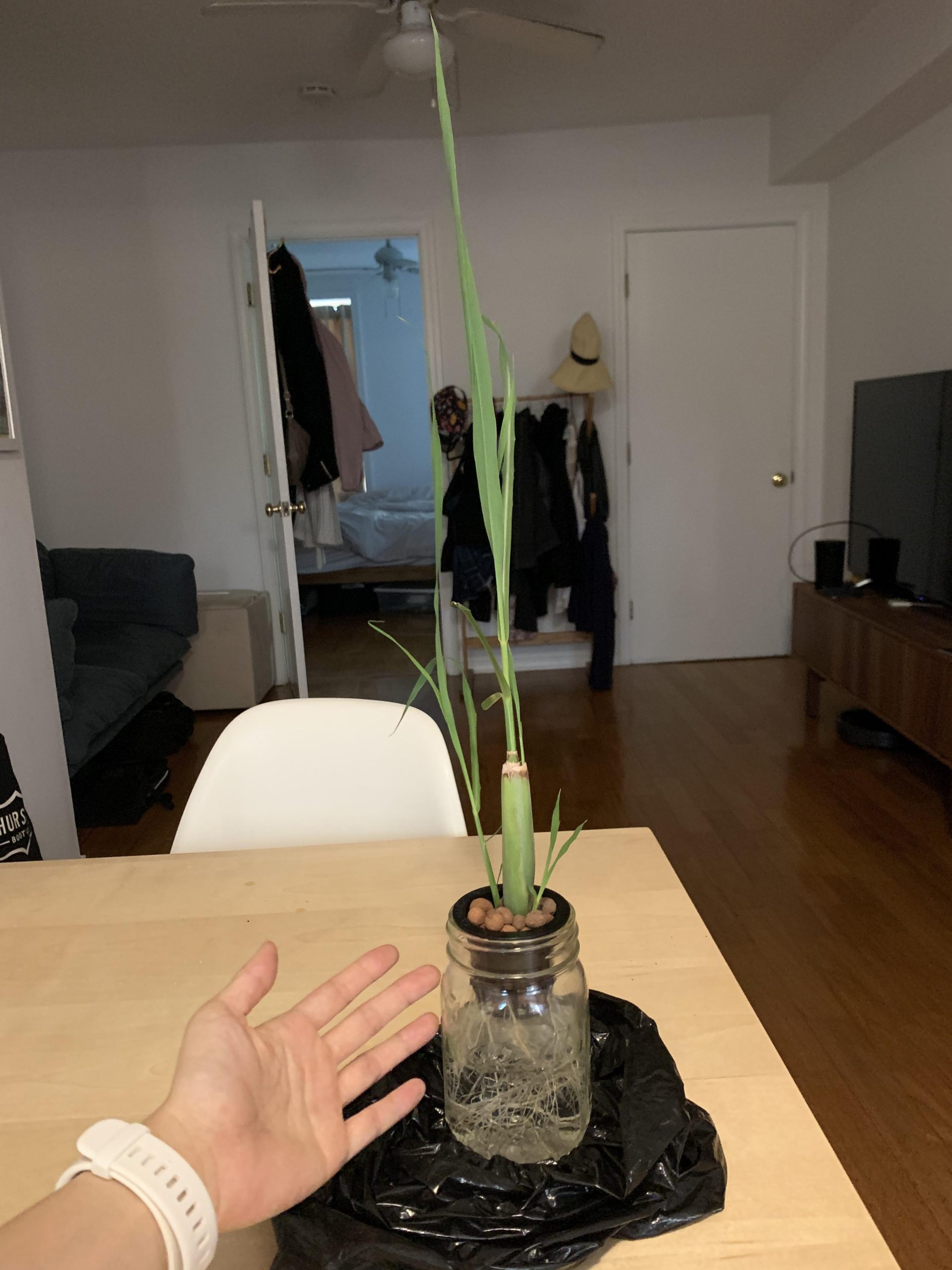
Lemongrass is easiest to start from stalk divisions rather than seed.
The best propagation material is a healthy stalk with a firm basal plate and some root tissue. If the stalk has no roots, it can often be rooted in clean water first, then transferred into media.
A simple propagation process:
- Select healthy lemongrass stalks from disease-free mother plants.
- Trim leaves to reduce transpiration stress.
- Keep the basal plate intact.
- Root the stalks in clean water or moist media.
- Once roots appear, transfer them into hydroponic media.
- Keep the crown above the wet zone to avoid rot.
- Give strong light after establishment.
- Begin with mild nutrient solution, then increase strength as growth accelerates.
For commercial production, the cleanest model is to maintain a mother plant block and take uniform divisions regularly.
Harvesting Hydroponic Lemongrass
Hydroponic lemongrass can be harvested in two ways.
The first method is stalk harvesting. Individual stalks are cut near the base when they reach usable size. This is best for restaurants, fresh markets and premium herb boxes.
The second method is leaf biomass harvesting. Leaves are cut for tea, hydrosol or essential-oil raw material. This is better for value-added processing.
For fresh culinary use, quality matters more than bulk weight. Buyers want clean stalks, strong aroma, good color, firm texture and consistent size.
For essential oil, biomass volume matters, but oil content and citral quality matter even more. Vietnam’s hydro-distillation research showed that cultivation origin and management affected oil yield and citral content, which means growers should not judge lemongrass only by fresh weight.
Best Use Cases for Hydroponic Lemongrass
1. Fresh Herb Supply for Restaurants
Restaurants need consistent quality, clean stalks and reliable delivery. Hydroponic lemongrass can serve this market well because the product is clean, uniform and available close to urban demand.
This is especially relevant for Ho Chi Minh City, Hanoi, Da Nang and tourist areas where restaurants use lemongrass daily.
2. Urban Herb Farming
Hydroponic lemongrass can be grown on rooftops, in small greenhouses, in courtyard farms or in compact peri-urban setups. It is not as space-efficient as lettuce, but it has a stronger fragrance, longer shelf life and more branding potential.
3. Nursery and Balcony Plant Business
This may be the smartest business use case.
Instead of selling only cut lemongrass, a grower can sell:
- Rooted lemongrass plants
- Balcony herb kits
- Kitchen herb pots
- Mosquito-repellent garden kits
- Vietnamese cooking herb sets
- Lemongrass + pandan + mint + basil bundles
- QR-code plant care guides
Hydroponics or semi-hydroponics can produce cleaner, more uniform starter plants.
4. Essential Oil and Hydrosol Trials
Hydroponic lemongrass can be tested as raw material for essential oil or hydrosol. However, growers should be realistic: essential-oil production needs a lot of biomass. A small hydroponic system is usually better for premium fresh herbs and nursery plants than bulk oil production.
That said, hydroponic systems may be useful for producing selected high-quality mother plants or testing how nutrition affects aroma compounds.
5. Farm Education and Smart Farming Demonstrations
Hydroponic lemongrass is excellent for demonstration farms because visitors immediately recognize the plant and understand its use. It can be part of a smart farming display with sensors, solar pumps, nutrient monitoring and QR traceability.
6. Circular Farming and Aquaponics
Lemongrass may also work in aquaponic or circular systems. The lemongrass soilless-culture study found that both hydroponic and aquaponic systems improved yield and water-use efficiency compared with soil, although hydroponics showed the highest yield increase in that study.
For small farms, this opens a practical model:
fish water → herb bed → clean lemongrass → fresh herbs / tea / hydrosol / nursery plants
Commercial Potential
Hydroponic lemongrass should not be judged only as a crop. It should be judged as a product platform.
A soil farmer may sell lemongrass as bulk stalks. A smart hydroponic grower can sell multiple products from the same plant:
| Product | Buyer | Value potential |
|---|---|---|
| Fresh stalks | Restaurants, supermarkets, home cooks | Daily cash flow |
| Rooted plants | Garden shops, balcony growers, small farms | Higher margin |
| Herb kits | Urban families, gift buyers | Branding potential |
| Leaves for tea | Herbal brands, cafés | Value-added |
| Hydrosol | Spa, home fragrance, natural cleaning | Premium niche |
| Essential oil | Cosmetics, fragrance, wellness product makers | Requires scale |
| Farm experience | Agri-tourism, workshops | Education income |
For Vietnam, the best early business model is not “hydroponic lemongrass for oil.” It is:
hydroponic lemongrass as a clean herb + nursery + small value-added product system.
Practical Business Model for Vietnam
A strong small-scale model could look like this:
Phase 1: Nursery and fresh herb trial
Start with 100–300 hydroponic or semi-hydroponic clumps. Sell fresh stalks locally and test rooted plant demand.
Phase 2: Restaurant supply
Build weekly supply relationships with restaurants, cafés, cooking schools and specialty food shops.
Phase 3: Balcony herb kits
Sell lemongrass together with pandan, Thai basil, Vietnamese coriander, mint and butterfly pea as a “Vietnamese kitchen garden kit.”
Phase 4: Value-added products
Use excess leaves for dried lemongrass tea, hydrosol, essential-oil trials or natural home products.
Phase 5: Traceable FarmVina system
Add QR codes showing origin, growing method, harvest date, care guide and recipe ideas.
This model fits Vietnam better than a purely industrial hydroponic farm because it combines production, branding, education and direct-to-consumer storytelling.
Common Problems and How to Avoid Them
1. Root Crowding
Lemongrass roots grow aggressively. Small pipes and narrow channels can clog quickly.
Solution: use buckets, media beds or large containers.
2. Crown Rot
If the base of the plant stays too wet, rot can develop.
Solution: keep the crown above the wet zone and provide good drainage and airflow.
3. Weak Aroma
Weak aroma can come from poor light, excessive shade, unbalanced nutrition or harvesting too young.
Solution: provide strong light, avoid overwatering the crown and test harvest timing.
4. Leaf Burn
High EC, heat stress or salt buildup can burn leaf tips.
Solution: monitor EC, flush periodically and protect plants from extreme greenhouse heat.
5. Falling Plants
Mature lemongrass clumps become tall and heavy.
Solution: use wide containers, wind protection and side support if needed.
6. Poor Economics
Hydroponics costs more than planting lemongrass directly into the ground.
Solution: target higher-value markets: restaurants, clean herb bundles, potted plants, nursery starts and branded products.
Hydroponic vs Soil-Grown Lemongrass
| Factor | Soil-grown lemongrass | Hydroponic lemongrass |
|---|---|---|
| Setup cost | Low | Medium to high |
| Technical skill | Low | Medium |
| Water efficiency | Depends on irrigation | Usually higher |
| Cleanliness | Soil attached to roots/base | Cleaner product |
| Pest pressure | Soil and field exposure | Lower soil-borne risk, but system diseases possible |
| Scalability | Easy for large land areas | Better for controlled high-value niches |
| Best use | Bulk fresh stalks, oil biomass, field borders | Fresh premium herbs, nursery plants, urban farms, controlled trials |
| Main risk | Weeds, soil disease, drought | Pump failure, nutrient mistakes, root disease |
| Business model | Commodity or local market | Premium, traceable, branded, educational |
The conclusion is simple: soil is better for low-cost bulk biomass, while hydroponics is better for clean, controlled and higher-value production.
Is Hydroponic Lemongrass Profitable?
It can be profitable, but only with the right market.
If the grower sells hydroponic lemongrass at the same price as ordinary field-grown lemongrass, the economics may be poor. Hydroponics has higher setup costs, more equipment and more management.
The business becomes more attractive when the product is positioned as:
- Clean premium fresh herb
- Restaurant-grade ingredient
- Potted kitchen herb
- Balcony garden plant
- Smart farming product
- Traceable Vietnamese herb
- Workshop/demo farm crop
- Input for tea, hydrosol or essential oil
The most important rule is:
Do not use hydroponics to compete in the cheapest commodity market. Use it to create a better product and a better customer relationship.
Conclusion: A Small Crop With a Smart Future
Hydroponic lemongrass is not yet mainstream, but it has real potential.
The crop is familiar, useful and marketable. The system is cleaner and more controllable than soil. Research suggests that soilless systems can improve lemongrass yield and water-use efficiency. Vietnam already has scientific and commercial interest in lemongrass essential oil, citral and value-added natural products.
The best opportunity is not to grow lemongrass hydroponically just because it is possible. The best opportunity is to use hydroponics to build a smarter lemongrass value chain:
clean herb → rooted plant → balcony kit → tea → hydrosol → essential oil → branded Vietnamese natural product.
For farmers, this is a way to escape commodity pricing.
For urban growers, it is a compact herb business.
For restaurants, it is a cleaner and more reliable ingredient.
FAQ
Can lemongrass grow hydroponically?
Yes. Lemongrass can grow hydroponically if the system provides enough root space, strong light, oxygen, nutrients and physical support. Dutch buckets, media beds and large container systems are better than small NFT channels.
Is hydroponic lemongrass better than soil-grown lemongrass?
It depends on the goal. Soil-grown lemongrass is cheaper for bulk production. Hydroponic lemongrass is better for clean fresh herbs, nursery plants, controlled production, urban farming and premium products.
What is the best hydroponic system for lemongrass?
The best beginner system is usually a Dutch bucket or large media-container system with drip irrigation. It gives lemongrass enough root space and support.
What pH is best for hydroponic lemongrass?
A practical starting pH is around 5.8–6.5. Hydroponic nutrient solutions are commonly managed around pH 5.5–6.5 for nutrient uptake, though each crop may respond differently.
Can hydroponic lemongrass be used for essential oil?
Yes, but essential-oil production requires significant biomass. Small hydroponic systems are usually better for fresh herbs, nursery plants and trials. Larger controlled systems may be useful for studying oil quality and aroma compounds.
Is hydroponic lemongrass suitable for Vietnam?
Yes. Vietnam has strong demand for lemongrass in food, fresh herbs, home gardens, natural products and essential oils. Hydroponic lemongrass is especially suitable for urban farms, nurseries, restaurant supply and smart farming demonstration projects.
Originally posted 2026-07-07 09:39:13.